Château de Merville: A Day of Heritage, Encounters and French Art de Vivre near Toulouse
Some places are deliberately added to a travel itinerary. Others are discovered almost by chance, thanks to an unexpected encounter.
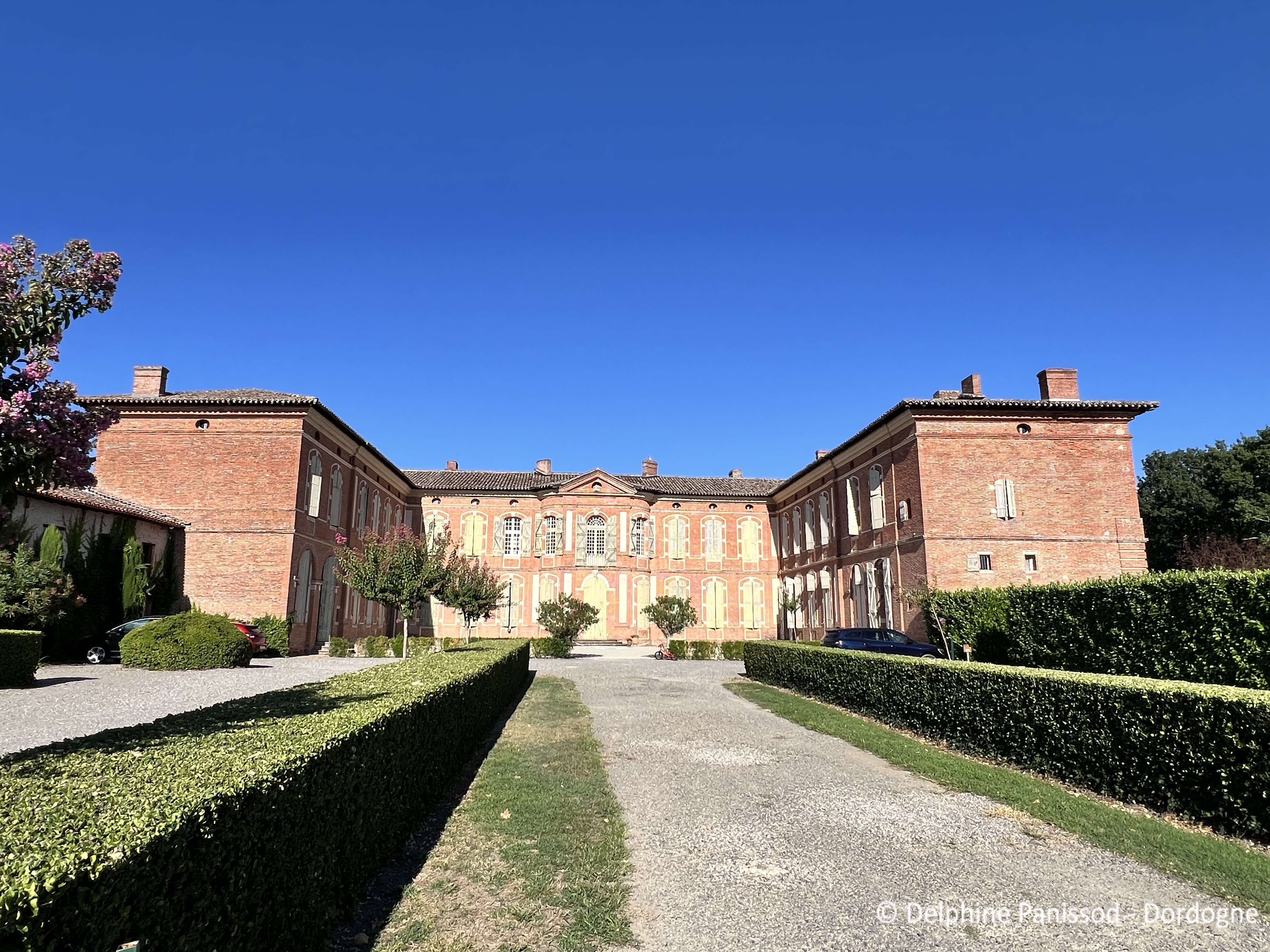
That is exactly how I had the opportunity to discover the Château de Merville, located around twenty kilometres from Toulouse, in the Haute-Garonne department of southwest France.
It all began a few weeks earlier at eXpcon, where I met a fellow eXp real estate professional who happens to be the owner of the château. After talking about real estate, our respective markets and the way we work, we decided to meet again at Merville and spend a day exchanging ideas and discussing business.
So I was expecting a working day in a rather pleasant setting.
I may have slightly underestimated the “setting”.
When your business meeting takes place in an 18th-century château listed as a Historic Monument, it is rather difficult not to forget about real estate for a few moments and simply look around.
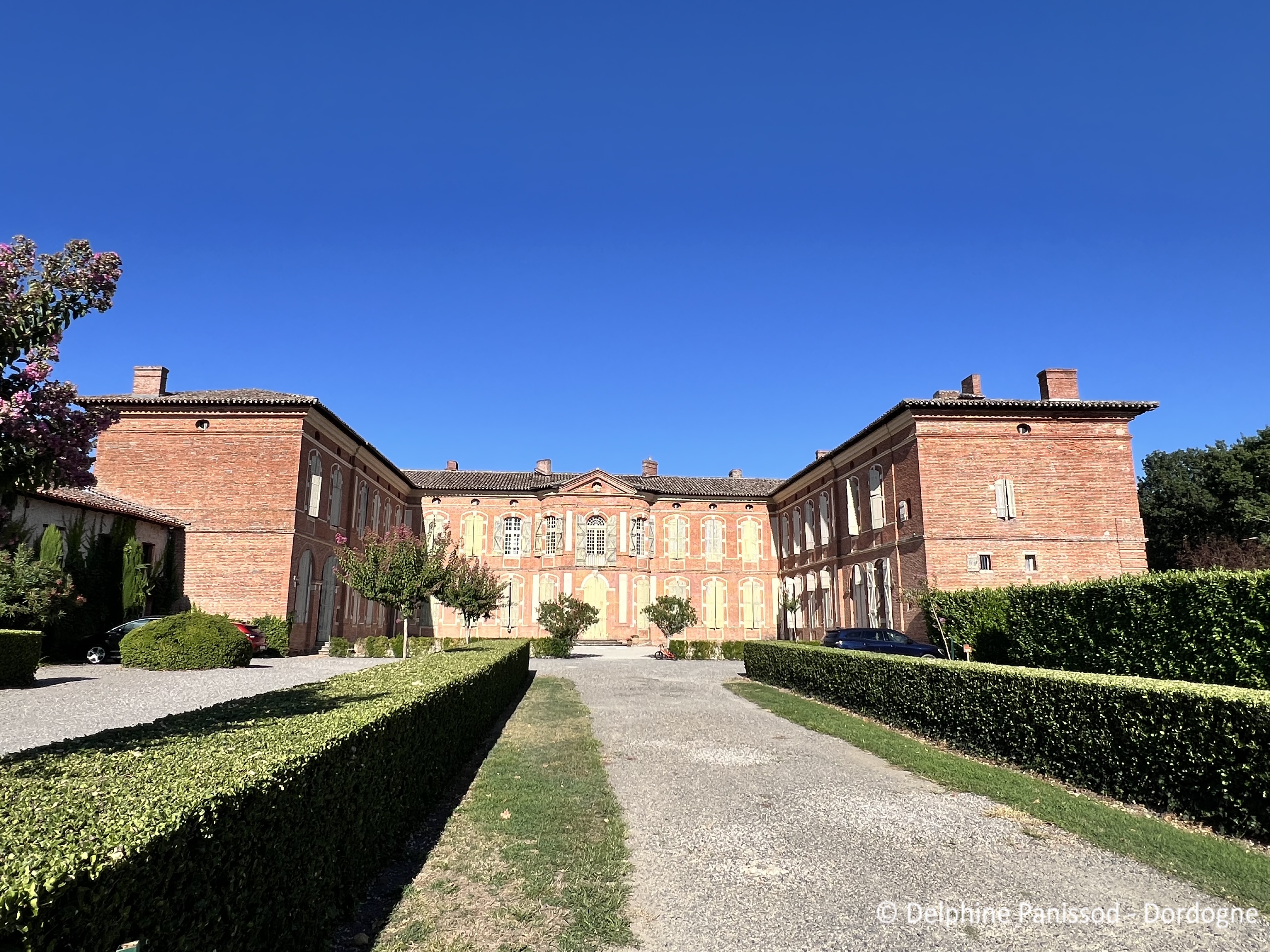
Le château de Merville – © Delphine Panissod
An 18th-century château near Toulouse
The Château de Merville is one of the beautiful examples of 18th-century architecture in the Toulouse region.
Construction began in 1743, commissioned by Henri-Auguste de Chalvet-Rochemonteix, Marquis de Merville and Grand Seneschal of Toulouse and Albigeois. The work continued for around fifteen years.
The château displays many of the architectural characteristics of this part of southwest France, where traditional stone is complemented by the distinctive pink brick so closely associated with Toulouse.
One of the things that makes Merville particularly special is that this is not simply a historic building that has been transformed into a museum. The estate has remained within the descendants of the family that originally built it.
And that inevitably changes the way you experience the place.
You are not simply visiting a château.
You are entering a family home that has survived through generations.
Behind the façade, remarkably preserved interiors
As soon as I entered the reception rooms, I was struck by how beautifully the interiors have been preserved.
Merville was fortunate enough to survive the French Revolution without being stripped of its furniture and decoration, allowing visitors today to discover a remarkably harmonious historic interior.
And naturally, with my camera in hand, I found it rather difficult to resist…
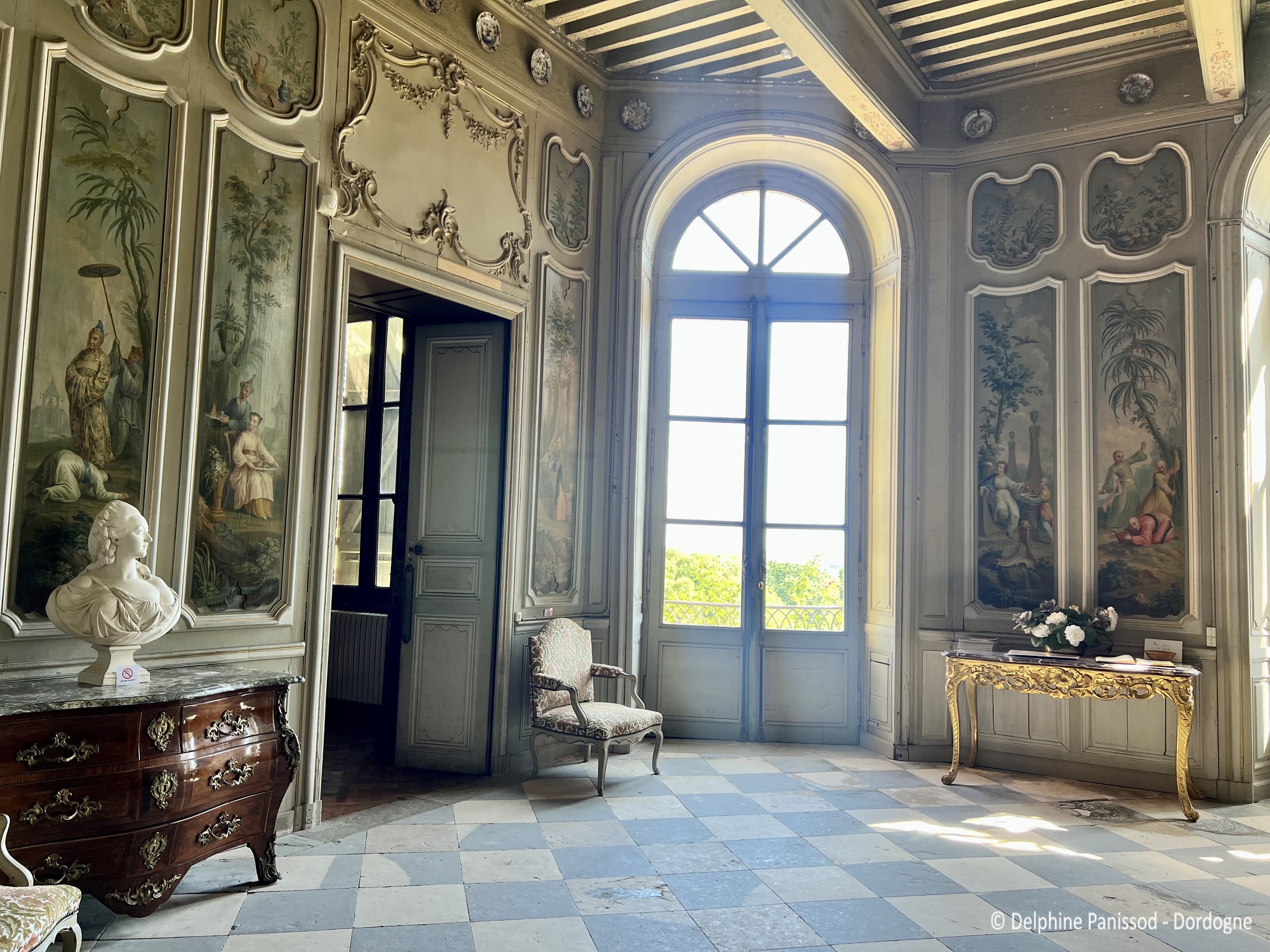
The grand salon – © Delphine Panissod
At first, your attention is drawn to the proportions of the room, the panelling, the light streaming through the tall windows and the beautiful chequered floor.
Then you start noticing the details.
The paintings.
The mouldings.
The furniture.
Even the door handles…
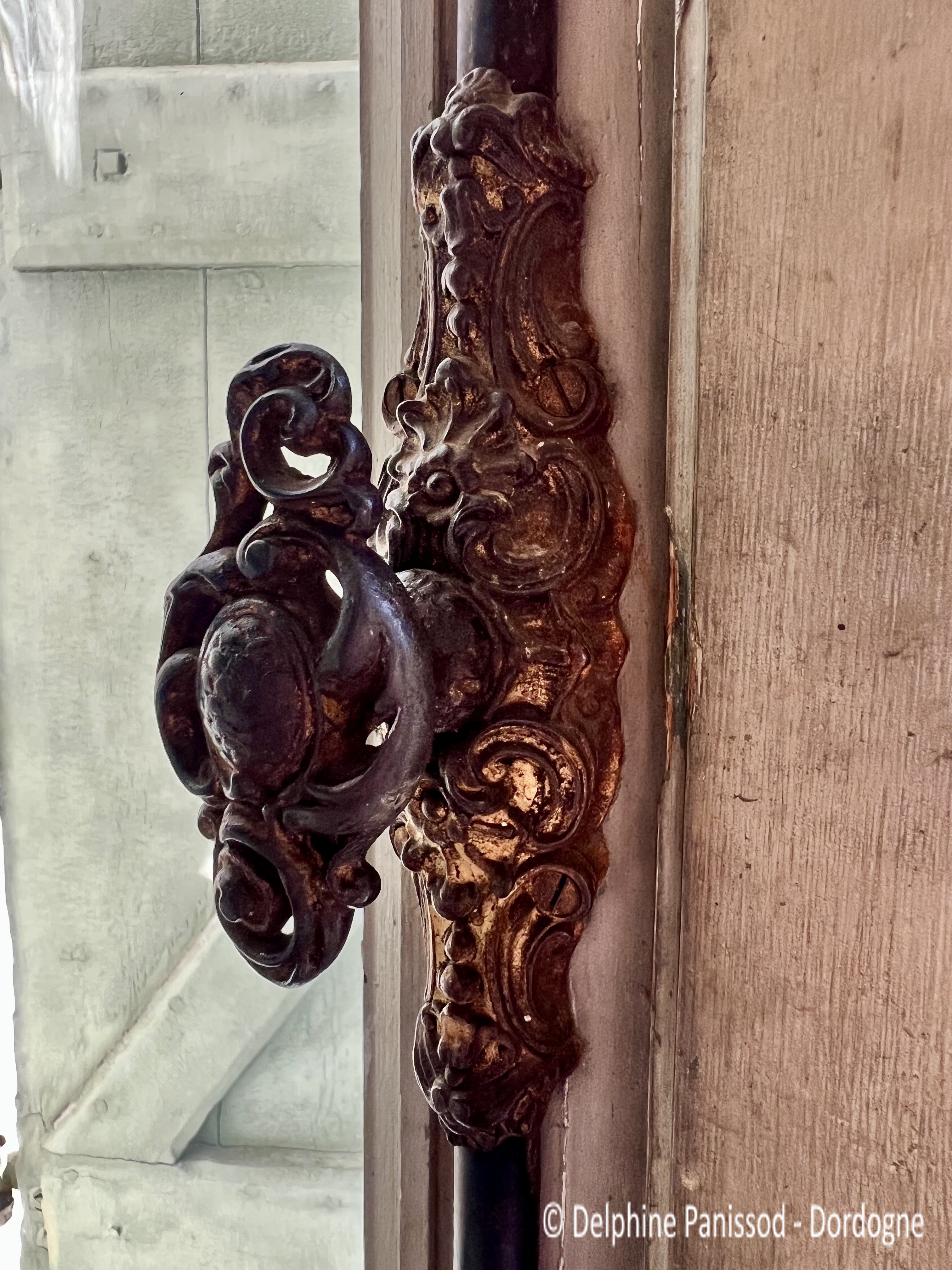
Detail of en antique door handle – © Delphine Panissod
That is often what I love most about historic properties: the small details you might not notice immediately, yet which tell just as much about the history of a house as its architecture.
The remarkable Chinese Salon
Among the château's most distinctive rooms is the Chinese Salon.
Its walls are decorated with eighteen large 18th-century oil-painted panels by Toulouse painter and architect Gilles Pin. Inspired by the European fascination with chinoiserie at the time, they create an exceptionally delicate and unusual interior.
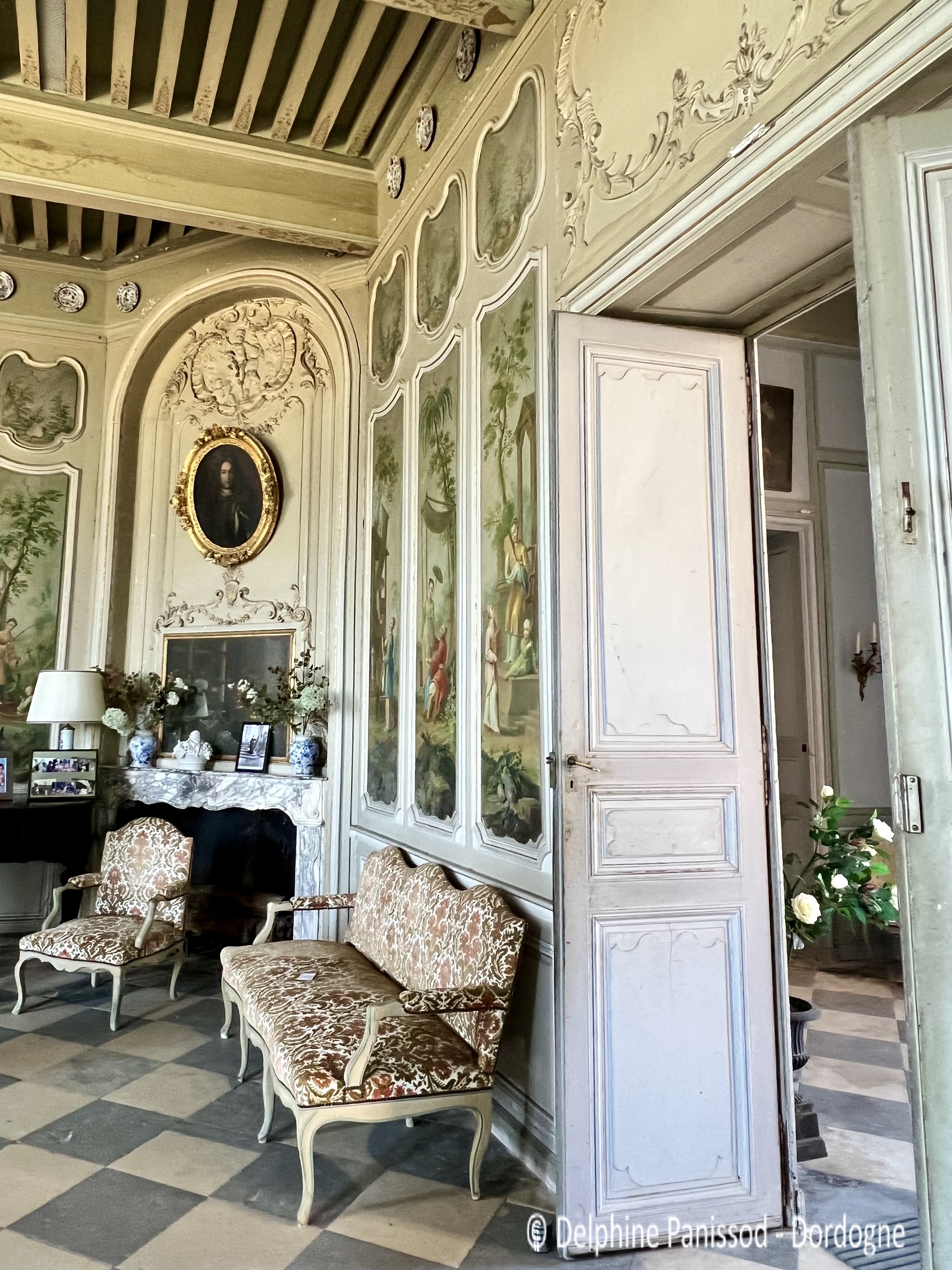
As if they were still waiting for you – © Delphine Panissod
One of the things I particularly enjoyed at Merville was the feeling that the interiors are not completely frozen in time.
Armchairs, portraits, decorative objects, flowers…
There is obviously an extraordinary heritage to preserve, but you can still sense that this is also a home.
An office that almost makes you want to work…
Since I had actually come to Merville to work, some rooms felt particularly appropriate.
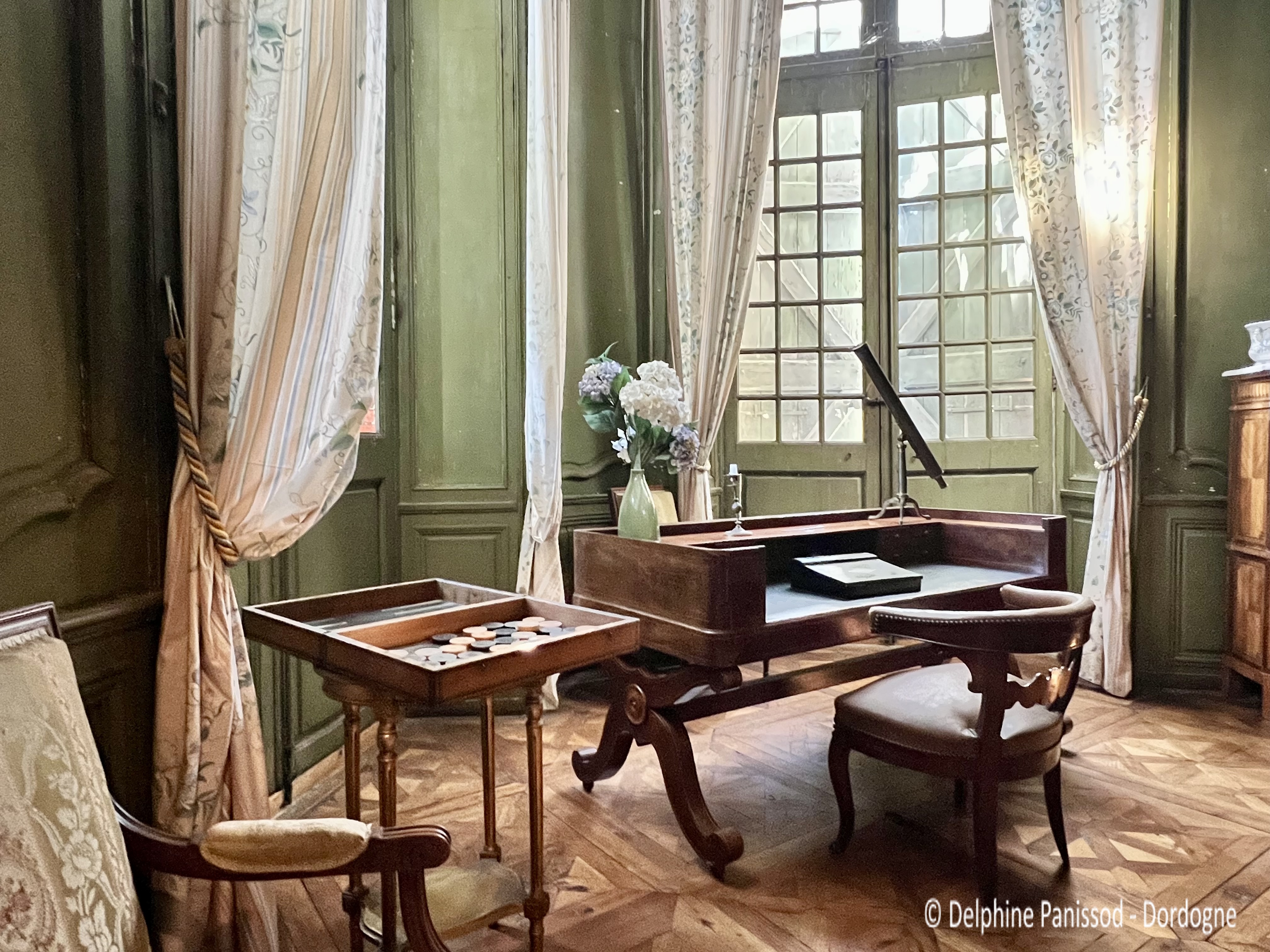
Time to sit and work – © Delphine Panissod
The Marquis's study, with its period furniture, curtains and beautiful green panelling, almost seems to be waiting for its occupant to return.
I have to admit that, as workplaces go, it would be difficult to find much better.
Even for talking about real estate.
A spectacular bedroom
The visit then takes you into a completely different atmosphere.
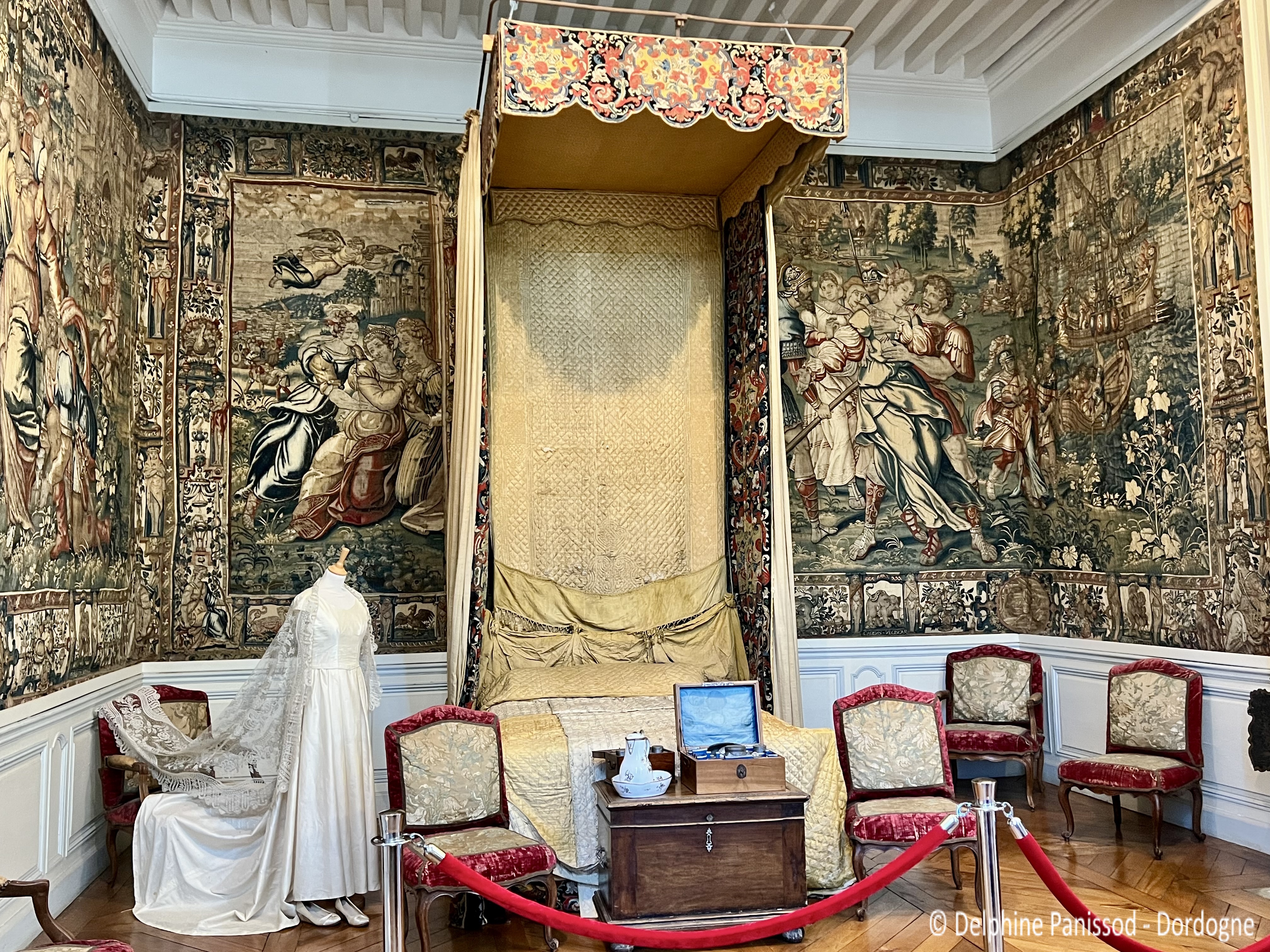
The highest the bed was, the richest the guest was – © Delphine Panissod
This remarkable bedroom is surrounded by magnificent tapestries, with an imposing four-poster bed, antique chairs and period furniture.
The château houses Flemish tapestries dating from the 16th and 17th centuries, together with furniture and decorative pieces handed down through generations.
Then there are all the smaller objects of everyday life, which suddenly make it much easier to imagine what living in a residence of this importance might once have been like.
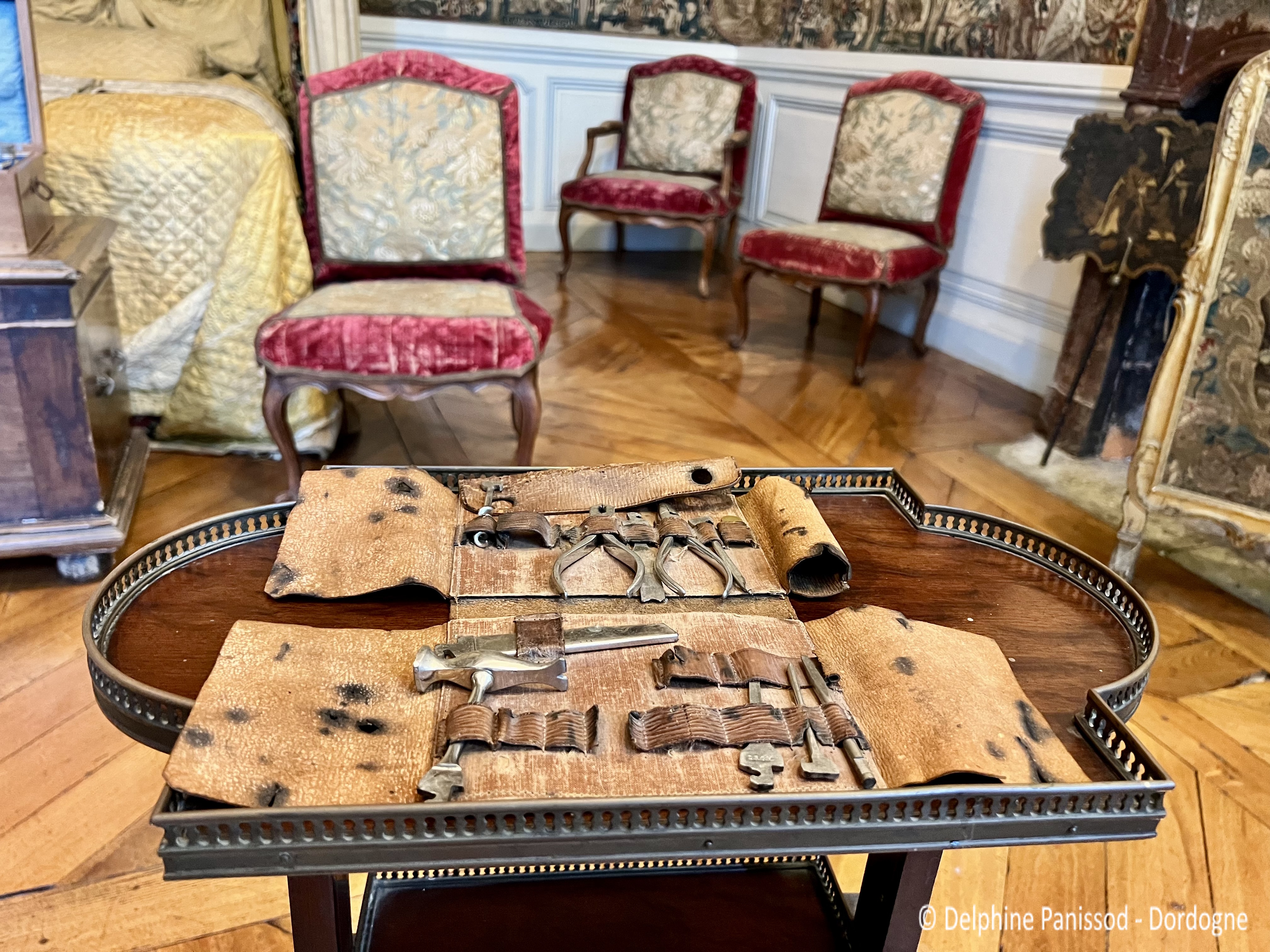
In case your teeth hurt ! – © Delphine Panissod
In many ways, these details reduce the distance between us and history.
You are no longer simply looking at antique furniture: you begin imagining people sitting at these desks, opening these boxes and walking through these rooms.
Outside… another treasure awaits
But Merville would not be Merville without its park.
Both the château and its grounds are protected as French Historic Monuments, while its famous maze has been awarded the prestigious Jardin Remarquable (“Remarkable Garden”) label.
From the château, a magnificent perspective seems to extend the reception rooms directly into the landscape.
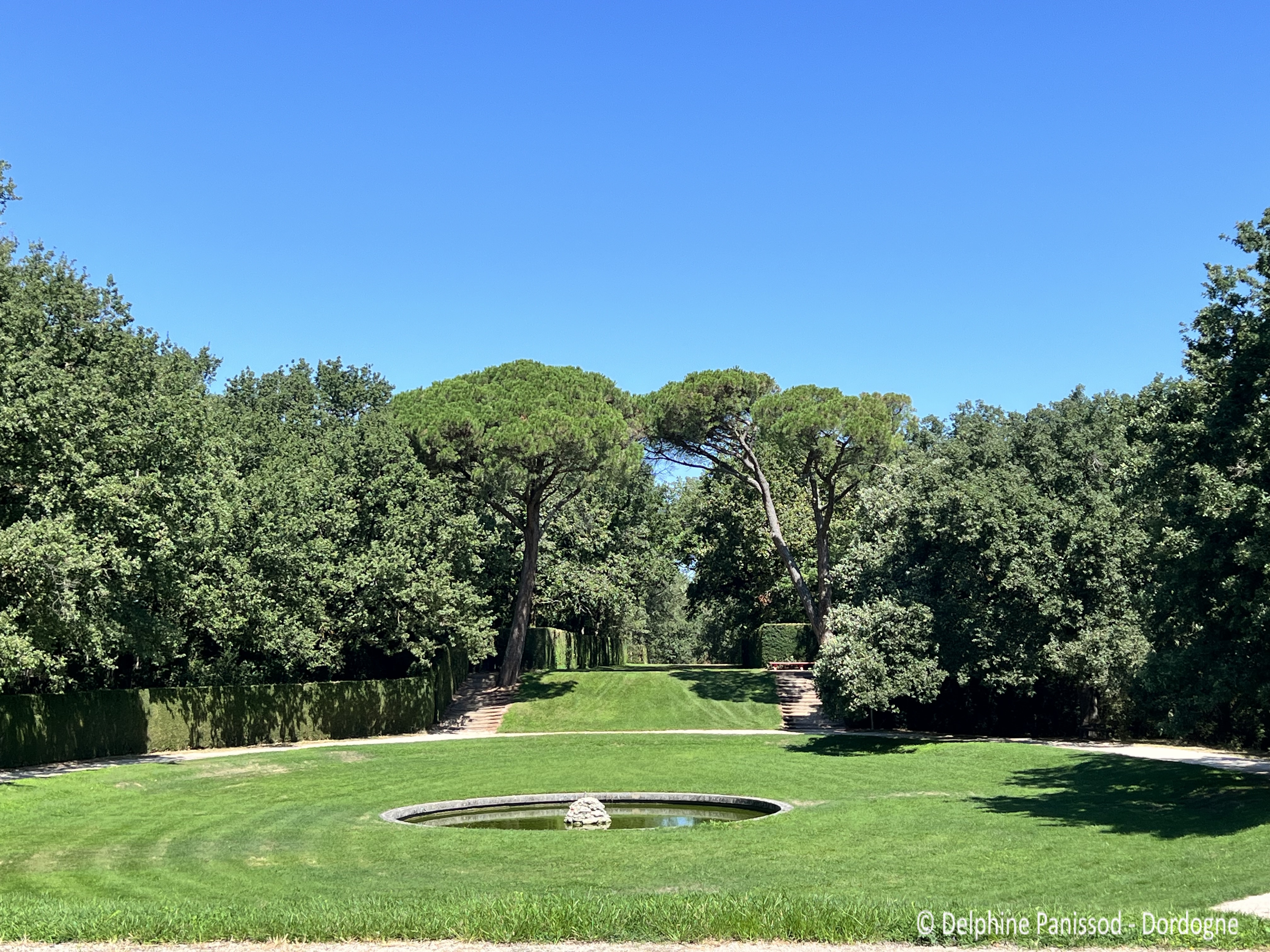
The grand perspective and pont – © Delphine Panissod
This view is no accident. The park's main perspective continues the alignment of the château's reception rooms for approximately 600 metres, creating that wonderfully 18th-century impression that the garden is almost another room of the house.
And just beyond lies the feature for which Merville has become particularly famous…
Getting lost in the Merville maze
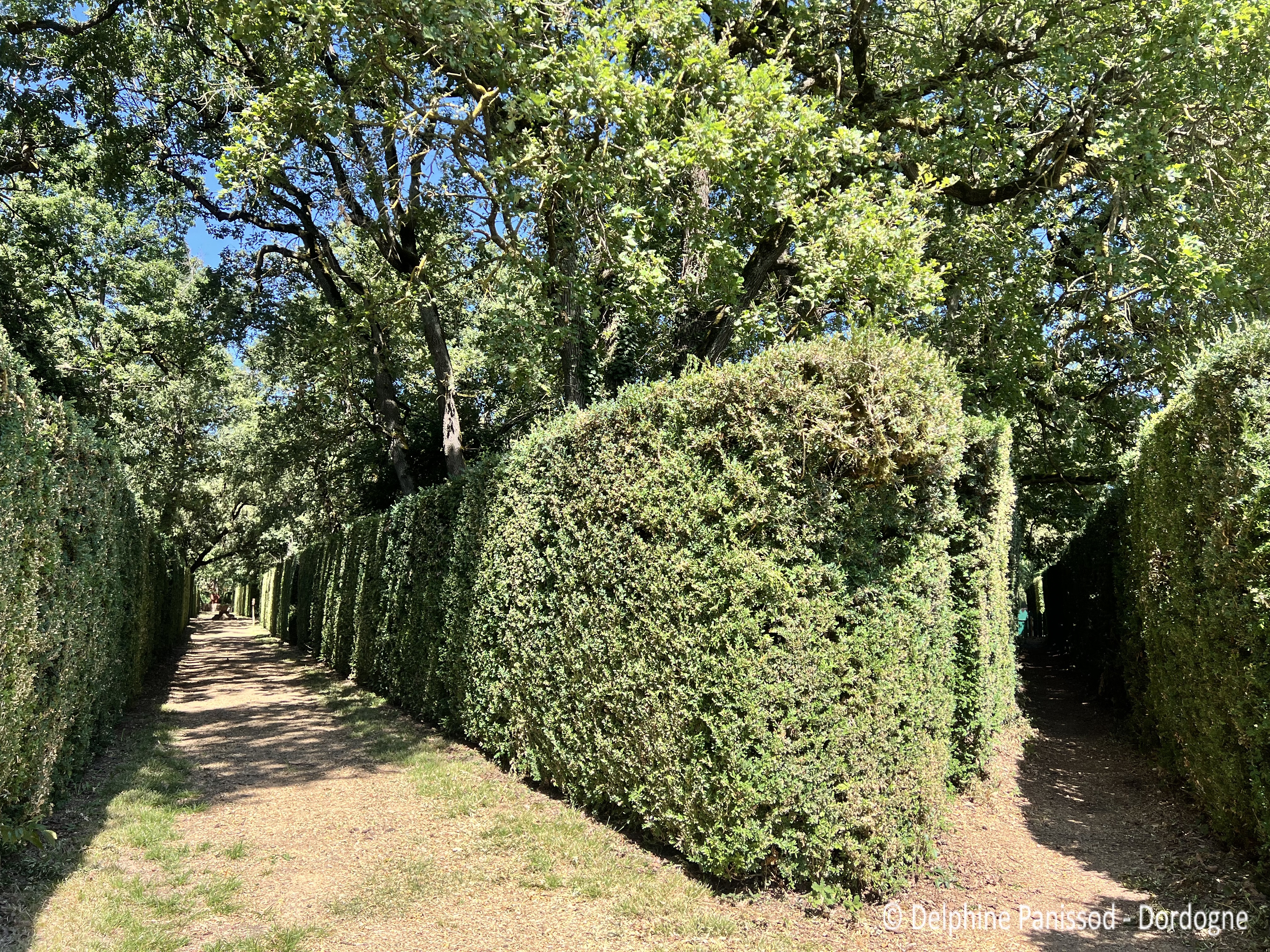
Getting lost in the boxwood maze– © Delphine Panissod
The Château de Merville is home to an extraordinary historic maze made up of kilometres of pathways enclosed by towering box hedges.
Today, the estate describes it as Europe's largest historic boxwood maze. Spread across several hectares of the park, it is a place where you can genuinely disappear between immense walls of greenery.
From the outside, finding your way through looks quite straightforward.
Once inside… considerably less so.
I particularly love the contrast between the strict geometry of the garden and the enormous mature trees that have gradually become part of the landscape.
When real estate also opens the door to extraordinary places
This day at Merville actually sums up one of the things I love about my profession.
Real estate is, of course, about houses, land and property projects.
But above all, it is about people and encounters.
Being part of an international network such as eXp has given me the opportunity to meet real estate professionals based in very different regions, share experiences and exchange ideas about the way we work.
And sometimes those professional encounters open the doors to some truly extraordinary places.
That day, we certainly talked a lot about real estate.
But between conversations, I also had the privilege of discovering an 18th-century château, its salons, furniture, history and extraordinary gardens.
There are certainly worse places to hold a business meeting !
Visiting the Château de Merville
The Château de Merville is located in Merville, Haute-Garonne, approximately 20 kilometres from Toulouse.
Visitors can discover the château as well as the park and its famous historic maze. Opening periods and visiting hours vary throughout the year, so it is advisable to check the château's official website before travelling.